%20Charging%20Load%20Management.png)
What is Electric Vehicle (EV) Charging Load Management?
A Complete Guide to EV Charging Optimization and Grid Stability
EV charging demand is growing rapidly—but so is the pressure on the electrical grid. Without proper load management, even a few charging stations can overload infrastructure, increase electricity costs, and limit scalability.
EV charging load management coordinates how electrical power is shared across multiple chargers to improve charging efficiency, avoid grid overloads, and keep the power network stable. By tracking real-time consumption and reallocating available power dynamically, load management lowers costs, increases infrastructure utilization, and delivers dependable charging.
In this guide, you'll learn:
- Why EV charging load management matters
- The difference between static and dynamic load balancing
- The core technologies that enable intelligent charging
- Smart charging innovations like V2G and AI optimization
- How load management applies across homes, fleets, and public charging
- Key challenges and future trends
- How to calculate ROI and cost savings
Whether you operate a charging network, manage a fleet, or want smarter home charging, mastering load management is essential for sustainable, cost-effective EV charging.
What is EV Charging Load Management and Why is it Important?
EV charging load management is the control system that governs how power is distributed across charging stations to ensure the electrical grid remains stable while optimizing energy usage.
It combines real-time data from chargers, grid capacity, and demand forecasts to intelligently allocate power.
Key Outcomes:
- Grid Stability – Prevents overloads and voltage drops
- Cost Efficiency – Reduces peak demand charges
- Infrastructure Optimization – Supports more chargers on existing electrical capacity
How Does EV Charging Load Management Work?
A load management system continuously monitors total energy consumption and available capacity. When multiple EVs are charging simultaneously, the system:
- Distributes available power across chargers
- Reduces output for lower-priority sessions
- Prioritizes charging based on rules like departure time or user type
This ensures efficient energy distribution without exceeding electrical limits.
Key Benefits of EV Charging Load Management
Implementing load management offers significant advantages:
- Peak Shaving – Reduces electricity costs during high demand
- Avoids Infrastructure Upgrades – No need for expensive electrical expansions
- Improves Reliability – Prevents downtime and system overloads
- Enables Scalability – Add more charging stations without increasing capacity
Who Benefits from EV Charging Load Management?
- Grid Operators – Stable and predictable electricity demand
- EV Owners – Reliable and uninterrupted charging
- Businesses – Lower operational costs and better ROI
- Property Managers – Monetize charging without grid risks
Types of EV Charging Load Management
Static Load Management
Static load management sets fixed power limits for chargers based on predefined configurations.
- Simple to implement
- No real-time monitoring required
- Best for predictable environments
Dynamic Load Management
Dynamic load management adjusts power distribution in real-time based on demand and grid conditions.
- Real-time optimization
- Higher efficiency and utilization
- Ideal for commercial and large-scale deployments
Key Differences
Technologies Behind EV Charging Load Management
Energy Management Systems (EMS)
EMS acts as the central brain, collecting data from chargers and grid systems to optimize power allocation.
Smart Chargers & Sensors
Smart chargers communicate with EMS and adjust power dynamically based on instructions.
Communication Protocols
- OCPP – Enables charger-to-software communication
- OCPI – Supports roaming and interoperability
- OSCP – Enables grid demand response integration
What is Smart Charging?
Smart charging enhances load management by aligning charging with grid demand, electricity pricing, and renewable energy availability.
Key Features:
- Demand response integration
- Charging during off-peak hours
- Renewable energy utilization (solar, wind)
Role of AI and Future Technologies
Advanced technologies are shaping the future of EV charging:
- AI & Machine Learning – Predict demand and optimize charging schedules
- Vehicle-to-Grid (V2G) – EVs can supply power back to the grid
- Predictive Analytics – Identify usage patterns and reduce inefficiencies
Applications of EV Charging Load Management
Residential Charging
- Prevents overload when multiple appliances are running
- Enables scheduled charging during off-peak hours
Commercial & Workplace Charging
- Reduces peak demand charges
- Prioritizes charging for employees or fleets
Fleet Charging
- Ensures vehicles are ready based on schedules
- Optimizes energy usage across multiple vehicles
Public Charging Stations
- Handles unpredictable demand
- Ensures fair power distribution among users
Challenges and Future Trends
Key Challenges:
- Interoperability across charger brands
- Grid infrastructure limitations
- Regulatory compliance
Future Trends:
- AI-driven autonomous charging
- Increased adoption of OCPP and open standards
- Growth of renewable-powered charging networks
How to Calculate ROI of EV Charging Load Management
Cost Savings:
- Reduced peak demand charges
- Lower electricity costs through smart scheduling
- Avoided infrastructure upgrades
ROI Tools:
- Energy usage analytics
- Simulation models
- Demand forecasting systems
How Evoltsoft Helps Businesses
At Evoltsoft, load management is more than a feature—it’s the foundation of scalable EV charging infrastructure.
We offer:
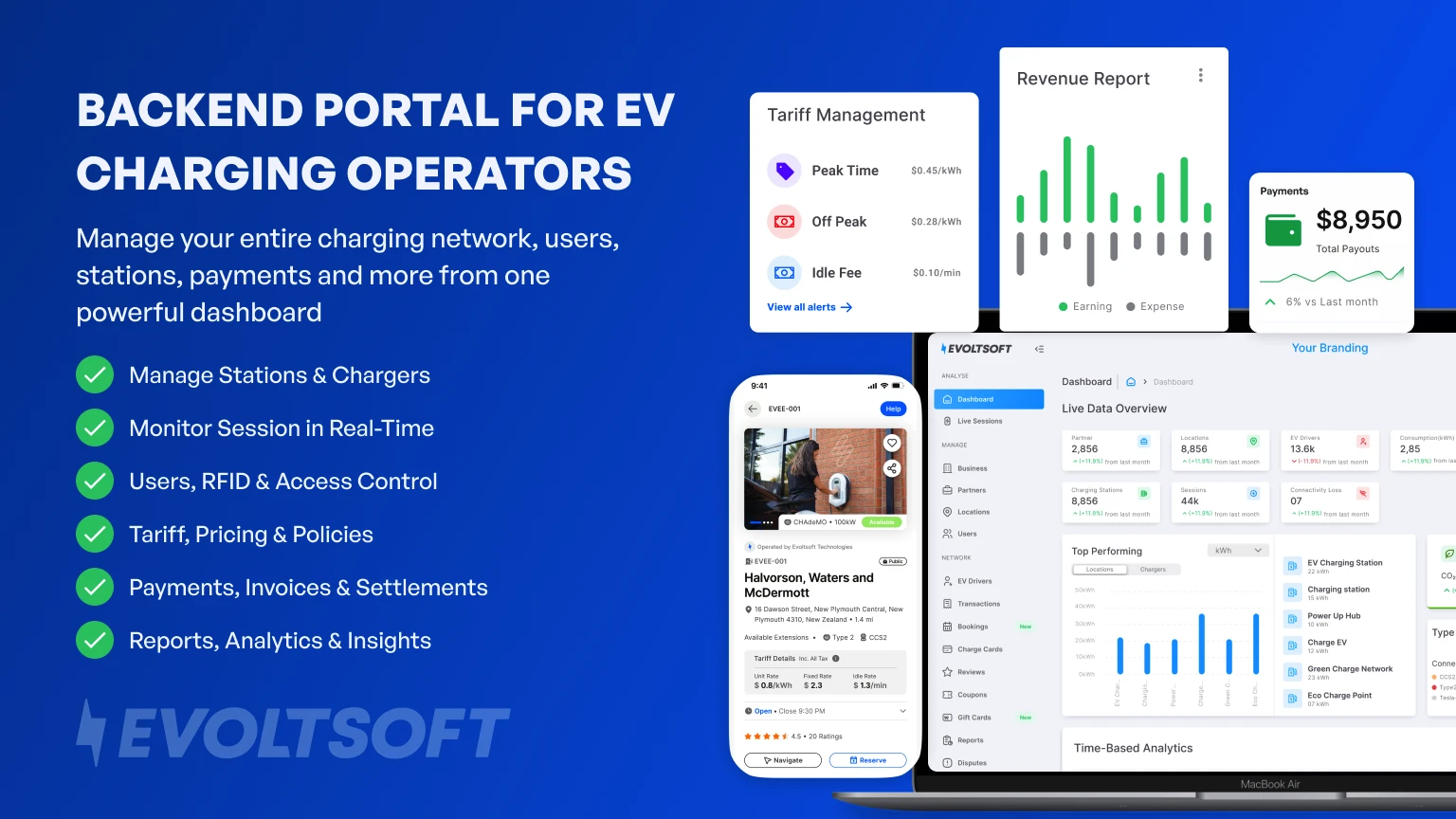
- Dynamic Load Balancing (DLB) – Real-time power optimization
- Smart Charging Integration – Align charging with tariffs and grid demand
- Fleet Optimization – Prioritize vehicles based on usage
- OCPP & OCPI Compliance – Hardware-agnostic and scalable
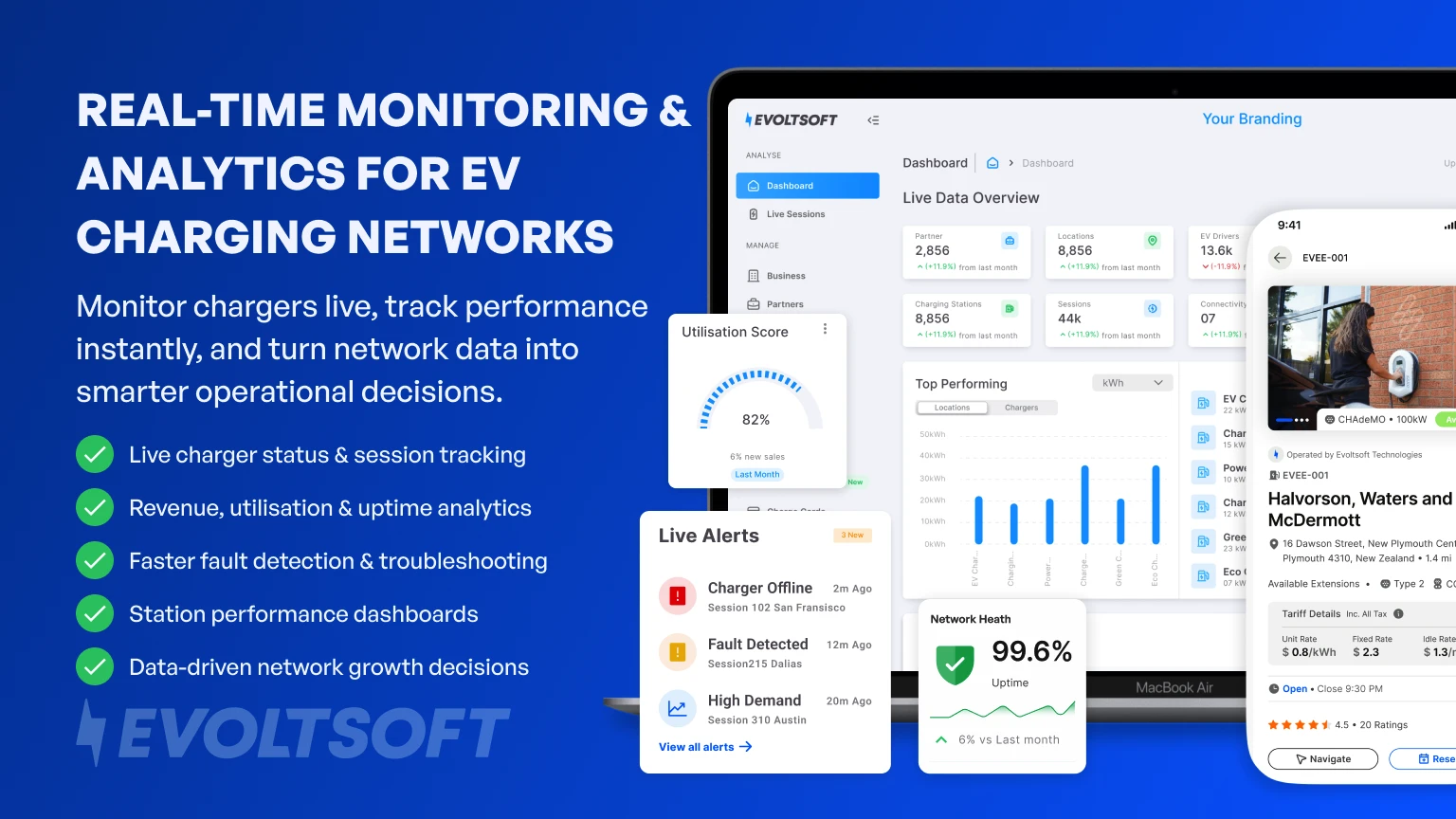
- AI & Analytics – Predict demand and improve efficiency
With Evoltsoft, businesses can reduce costs, improve performance, and scale confidently.
Ready to Optimize Your EV Charging Network?
If you're planning to scale your EV charging infrastructure, implementing smart load management is critical.
Evoltsoft helps you:
- Reduce electricity costs
- Avoid expensive upgrades
- Build scalable, future-proof charging networks
Book a demo: https://www.evoltsoft.com/book-demo